








-
Ras Al Khaimah
'%3e%3cpath%20d='M5.94991%206.49058C6.76271%206.49058%207.42161%205.83168%207.42161%205.01888C7.42161%204.20609%206.76271%203.54719%205.94991%203.54719C5.13712%203.54719%204.47822%204.20609%204.47822%205.01888C4.47822%205.83168%205.13712%206.49058%205.94991%206.49058Z'%20stroke='%235F7896'%20stroke-width='0.82415'%20stroke-linecap='round'%20stroke-linejoin='round'/%3e%3cpath%20d='M5.94991%2010.9057C7.91218%208.94341%209.87444%207.18634%209.87444%205.01888C9.87444%202.85143%208.11737%201.09436%205.94991%201.09436C3.78246%201.09436%202.02539%202.85143%202.02539%205.01888C2.02539%207.18634%203.98765%208.94341%205.94991%2010.9057Z'%20stroke='%235F7896'%20stroke-width='0.82415'%20stroke-linecap='round'%20stroke-linejoin='round'/%3e%3c/g%3e%3cdefs%3e%3cclipPath%20id='clip0_6514_2959'%3e%3crect%20width='11.7736'%20height='11.7736'%20fill='white'%20transform='translate(0.0644531%200.11322)'/%3e%3c/clipPath%3e%3c/defs%3e%3c/svg%3e)
-
201-500 employees
'%3e%3cpath%20d='M2.67374%2010.4225C2.97216%209.71946%203.66891%209.22634%204.48083%209.22634H7.42423C8.23615%209.22634%208.9329%209.71946%209.23132%2010.4225M7.91479%205.5471C7.91479%206.63083%207.03626%207.50936%205.95253%207.50936C4.8688%207.50936%203.99027%206.63083%203.99027%205.5471C3.99027%204.46337%204.8688%203.58484%205.95253%203.58484C7.03626%203.58484%207.91479%204.46337%207.91479%205.5471ZM10.8582%206.77351C10.8582%209.48283%208.66185%2011.6792%205.95253%2011.6792C3.24321%2011.6792%201.04688%209.48283%201.04688%206.77351C1.04688%204.0642%203.24321%201.86786%205.95253%201.86786C8.66185%201.86786%2010.8582%204.0642%2010.8582%206.77351Z'%20stroke='%235F7896'%20stroke-width='0.82415'%20stroke-linecap='round'%20stroke-linejoin='round'/%3e%3c/g%3e%3cdefs%3e%3cclipPath%20id='clip0_6514_2962'%3e%3crect%20width='11.7736'%20height='11.7736'%20fill='white'%20transform='translate(0.0644531%200.88678)'/%3e%3c/clipPath%3e%3c/defs%3e%3c/svg%3e)
-
Interior & Fit out
'%3e%3cpath%20d='M7.91479%203.59428C7.91479%203.13807%207.91479%202.90996%207.86465%202.72281C7.72856%202.21494%207.33187%201.81825%206.824%201.68217C6.63685%201.63202%206.40874%201.63202%205.95253%201.63202C5.49632%201.63202%205.26821%201.63202%205.08106%201.68217C4.57319%201.81825%204.1765%202.21494%204.04042%202.72281C3.99027%202.90996%203.99027%203.13807%203.99027%203.59428M2.61668%2010.4622H9.28838C9.83786%2010.4622%2010.1126%2010.4622%2010.3225%2010.3553C10.5071%2010.2612%2010.6572%2010.1111%2010.7512%209.92649C10.8582%209.71662%2010.8582%209.44187%2010.8582%208.89239V5.16409C10.8582%204.61461%2010.8582%204.33986%2010.7512%204.12999C10.6572%203.94538%2010.5071%203.79528%2010.3225%203.70122C10.1126%203.59428%209.83786%203.59428%209.28838%203.59428H2.61668C2.0672%203.59428%201.79246%203.59428%201.58258%203.70122C1.39797%203.79528%201.24788%203.94538%201.15381%204.12999C1.04688%204.33986%201.04688%204.61461%201.04688%205.16409V8.89239C1.04688%209.44187%201.04688%209.71662%201.15381%209.92649C1.24788%2010.1111%201.39797%2010.2612%201.58258%2010.3553C1.79246%2010.4622%202.0672%2010.4622%202.61668%2010.4622Z'%20stroke='%235F7896'%20stroke-width='0.82415'%20stroke-linecap='round'%20stroke-linejoin='round'/%3e%3c/g%3e%3cdefs%3e%3cclipPath%20id='clip0_6514_2965'%3e%3crect%20width='11.7736'%20height='11.7736'%20fill='white'%20transform='translate(0.0644531%200.160339)'/%3e%3c/clipPath%3e%3c/defs%3e%3c/svg%3e)
,
Waterproofing,
Insulation,
General contracting,
Manufacturing

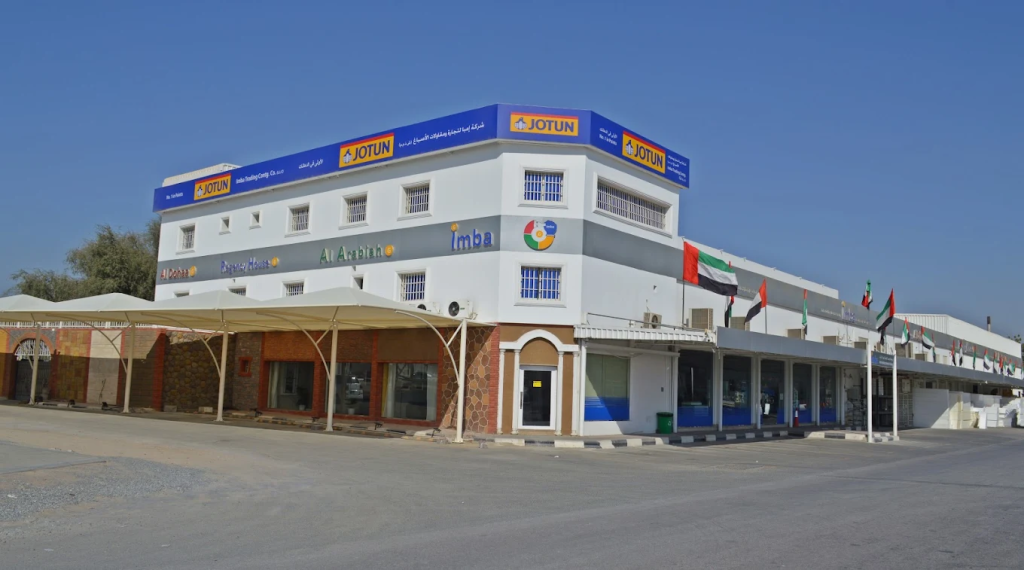
Company Profile & Initial Challenges
Pre-ERP Challenges
- Disjointed software systems. The company used three separate software solutions for HR, warehouse management, and accounting, which made it difficult to synchronize data and track performance.
- Inventory mismatches & costing issues. Sales and purchase transactions were recorded in different systems, leading to frequent stock balance discrepancies and inaccurate cost tracking.
- Manual payroll processing. Salaries were calculated in Excel, and HR had to manually generate payroll data and record it in the accounting software, increasing the risk of errors.
- Lack of POS system & project costing. IMBA had no dedicated POS system and relied on general ledger accounts to record project costs, making cost allocation difficult.
- Inefficiencies in financial reporting & VAT compliance. Year-end financial closings were prone to system crashes and errors in depreciation calculations. VAT returns required manual data entry because tax invoice numbers, supplier names, and other key information weren’t readily available in reports.
The Tipping Point: Recognizing the Need for Change
- Lack of integration. Each department worked separately, making it difficult to share data across finance, sales, and purchasing.
- Difficulty in upgrading. Because the system was custom-made, updating or modifying features required lengthy, expensive development cycles.
- Lack of control over financial reporting. Reports often didn’t reflect real-time numbers, making forecasting unreliable.
- Limited backup and system downtime. One of the most critical issues was related to data backup and system availability. The company hosted the software physically on its own servers, which made it vulnerable to power outages and technical faults.
We faced real problems with electricity disruptions. If the server was down, we were offline. That’s a huge issue when you're relying on the system for daily operations. We needed software that wouldn’t keep us offline during updates and had reliable backups we could count on.
Marketing And Public Relations Manager at Imba Building Materials Trading LLC
- Document chaos in the contracting division. Project documentation was another recurring pain point. Previously, IMBA’s contracting department managed all project documents manually, using physical files. “If someone was looking for a piece of paper, we could stay for weeks looking for it.” Files would get misplaced, damaged, or lost entirely.
Keeping everything in record was hard when the previous system wasn’t connected as it should be. The purchase department used a separate system from finance and sales. That created big challenges, especially during stock checks and year-end closing.
Marketing And Public Relations Manager at Imba Building Materials Trading LLC
The Evolution of IMBA’s Software Journey
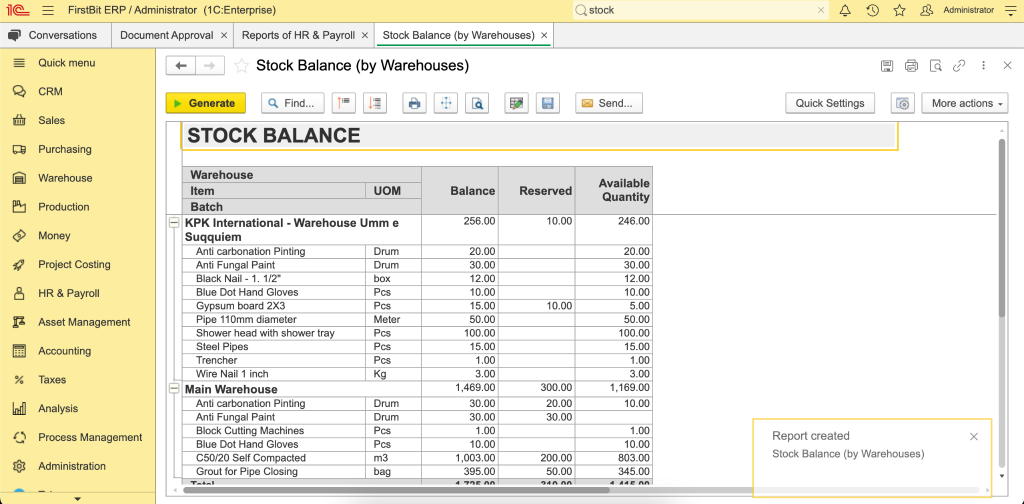
Let’s say a project was estimated at $10, but we ended up spending $15. Before, we wouldn’t know why. Now we can trace it back, identify the gap, and go back to the estimation to see what went wrong.
IT Manager at Imba Building Materials Trading LLC
Now, everything is stored in the system — invoices, proposals, RFQs, statements — all organized by project or even by subject. It saves time, prevents errors, and makes our lives easier.
IT Manager at Imba Building Materials Trading LLC
Continuous Improvement & Long-Term Impact
- An 8% increase in sales attributed to better financial insights and decision-making.
- Elimination of multi-million-dollar stock discrepancies, preventing future inventory losses.
- Improved project cost tracking and financial reporting, enabling better forecasting.
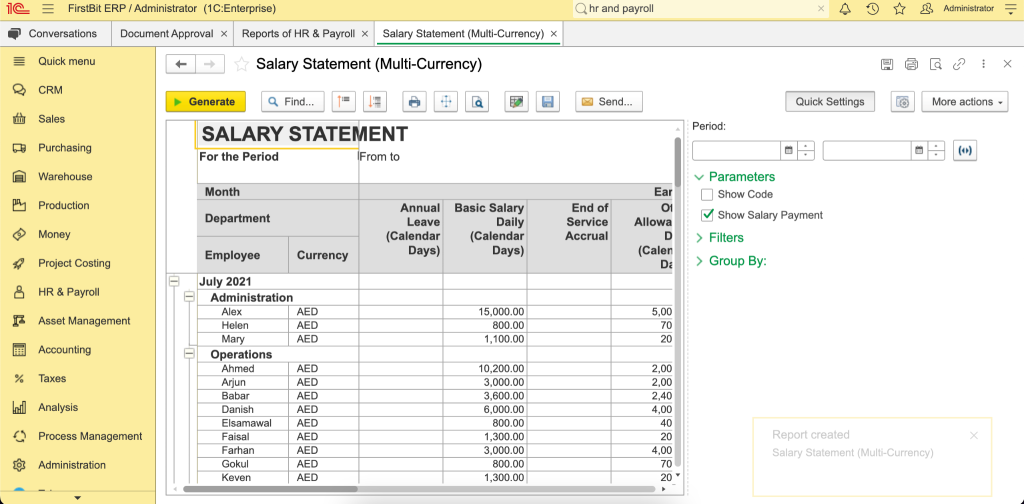
- Automated HR and payroll processing, reducing administrative workload and the risk of errors.
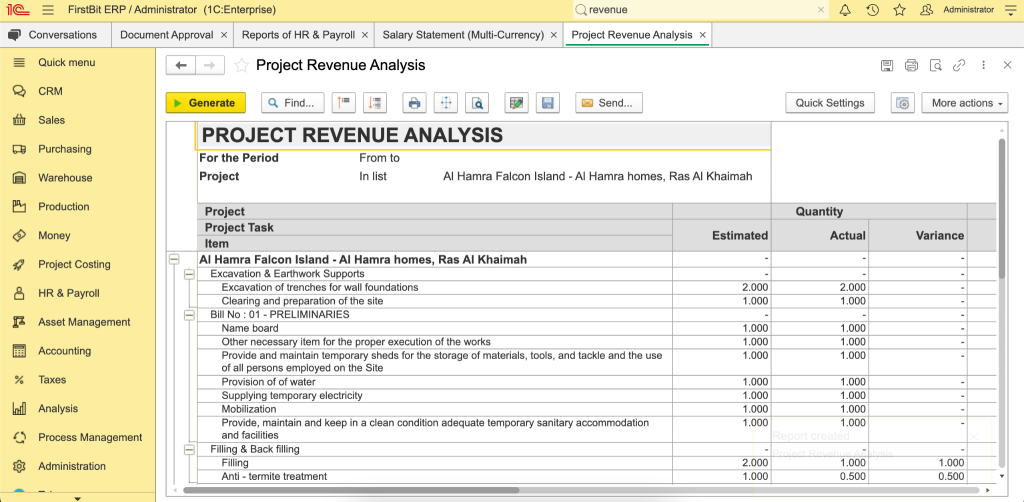
Among the most valuable features for IMBA were revenue and cost analysis reports, which provided real-time tracking of planned versus actual costs. The project overview dashboards gave managers a clear financial snapshot of ongoing work, improving budget management.
Key Reports Driving Real Business Decisions
- Revenue and cost analysis. This report provides a side-by-side view of planned vs. actual costs and revenues per project, helping project managers immediately spot cost overruns or margin gaps.
- Overview of projects. A high-level report that summarizes project performance, including financial status, budget variances, and execution progress — all in one view.
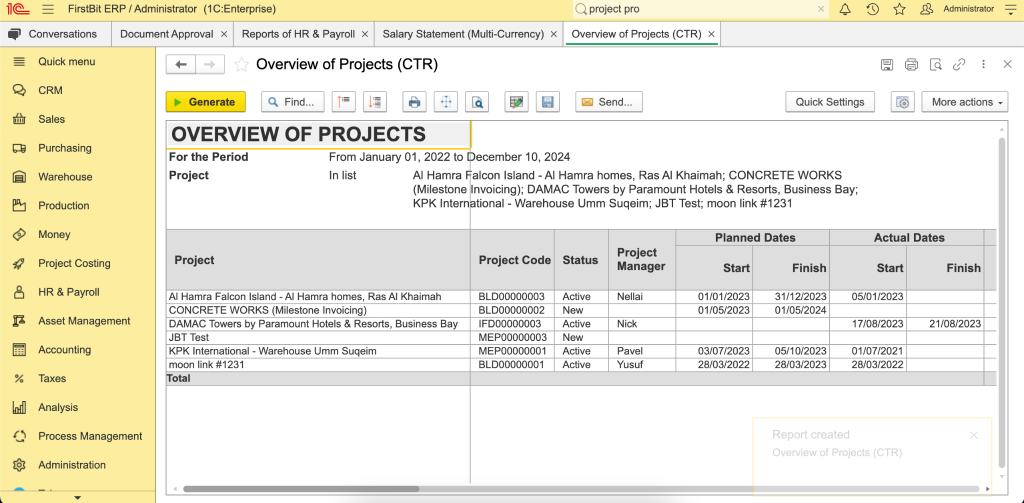
These are the reports we rely on the most. You can actually see how your estimates performed against reality, and take action where needed.
IT Manager at Imba Building Materials Trading LLC
Reflecting on the Journey & Looking Forward
Things changed rapidly with us — new business, new challenges every time. That’s why we needed a flexible system that could adapt to our needs. What makes the biggest difference is how easily the First Bit team understands what we’re trying to achieve. They translate our requirements into real functionality. That’s a huge advantage — the system can change quickly, and the team behind it really gets it.
Marketing And Public Relations Manager at Imba Building Materials Trading LLC
We started with trading, tested FirstBit ERP, and expanded it to other areas. If I were not convinced or if we, as management, were not convinced, we would’ve never gone for it. We’ve even recommended it to others. Our auditors told us this software is better than some solutions from bigger competitors. That kind of feedback confirmed we made the right choice.
IT Manager at Imba Building Materials Trading LLC
-
Ras Al Khaimah
-
201-500 employees
-
Interior & Fit out
,
Waterproofing,
Insulation,
General contracting,
Manufacturing
'%3e%3cg%20clip-path='url(%23clip1_6548_6055)'%3e%3cpath%20d='M13.974%2015.6195C14.2724%2016.0185%2014.6532%2016.3487%2015.0905%2016.5876C15.5278%2016.8265%2016.0114%2016.9686%2016.5084%2017.0042C17.0055%2017.0398%2017.5043%2016.9681%2017.9712%2016.7939C18.4381%2016.6198%2018.8621%2016.3472%2019.2143%2015.9948L21.2994%2013.9098C21.9324%2013.2544%2022.2827%2012.3766%2022.2747%2011.4654C22.2668%2010.5543%2021.9014%209.68269%2021.257%209.03839C20.6127%208.39408%2019.7412%208.02862%2018.83%208.0207C17.9189%208.01278%2017.0411%208.36305%2016.3857%208.99606L15.1902%2010.1845M16.754%2014.2295C16.4555%2013.8305%2016.0747%2013.5003%2015.6374%2013.2614C15.2002%2013.0225%2014.7166%2012.8804%2014.2196%2012.8448C13.7225%2012.8092%2013.2237%2012.8809%2012.7568%2013.0551C12.2899%2013.2292%2011.8659%2013.5018%2011.5136%2013.8542L9.42861%2015.9392C8.7956%2016.5946%208.44534%2017.4724%208.45326%2018.3836C8.46117%2019.2947%208.82664%2020.1663%209.47094%2020.8106C10.1152%2021.4549%2010.9868%2021.8204%2011.898%2021.8283C12.8091%2021.8362%2013.6869%2021.4859%2014.3423%2020.8529L15.5308%2019.6645'%20stroke='%235F7896'%20stroke-width='1.39002'%20stroke-linecap='round'%20stroke-linejoin='round'/%3e%3c/g%3e%3c/g%3e%3crect%20x='0.438953'%20y='0.438953'%20width='28.9709'%20height='28.9709'%20rx='14.4855'%20stroke='%235F7896'%20stroke-width='0.877907'/%3e%3cdefs%3e%3cclipPath%20id='clip0_6548_6055'%3e%3crect%20width='29.8488'%20height='29.8488'%20rx='14.9244'%20fill='white'/%3e%3c/clipPath%3e%3cclipPath%20id='clip1_6548_6055'%3e%3crect%20width='16.6802'%20height='16.6802'%20fill='white'%20transform='translate(7.02344%206.58435)'/%3e%3c/clipPath%3e%3c/defs%3e%3c/svg%3e)







See FirstBit ERP solutions in action
Discover how our system solves the unique challenges of contractors in a personalized demo.
After the demo you will get a quotation for your company.